Facebook
 YouTube
 LinkedIn
 BNI
In short: A business consultant who builds your small business website starts with your business, then builds the site around the work you want more of. So the enquiries that come in are for the jobs you actually want.
I ask which jobs you want more of, why your best customers pick you, and what people need to know before they get in touch.
Those answers decide the pages, the words and the enquiry form.
Every Fast Website client gets two free hours on their business, including a Business Diagnostic.
I do the planning, writing and build, and bring in a designer when a project needs specialist visual design.
If your website brought you ten more enquiries next month, what would you want them to be for?
Have a think about that one. Honestly, the answer matters more than the layout, the colours or the fonts. A small business website is a business tool, and before I build one I want to understand the business it has to serve.
I’ve been building websites for clients since the 1990s, and working as a business consultant since the 2000s. Those two jobs overlap far more than you’d think. Mostly in the bit before anyone touches the design.
Why does the business come before the build?
Before I write a word of copy, I want answers to three questions.
Which jobs do you want more of? Some work pays better or suits your team better, and some you just enjoy more (that counts too). Whichever it is, your website should go after that work on purpose.
Why do your best customers choose you? Whatever they tell you is usually why the next lot will come too. Put it on the page, in plain words.
What does someone need to know before they feel ready to enquire? People turn up with questions. Answer them honestly and you’ve earned some trust before you’ve even picked up the phone.
Once we’ve got those answers, the site almost writes itself. Almost. The pages, the words and the enquiry form all point towards the work you actually want.
Where to start: Three questions about your business come first. The website gets built around the answers.
How does one business decision shape a small business website?
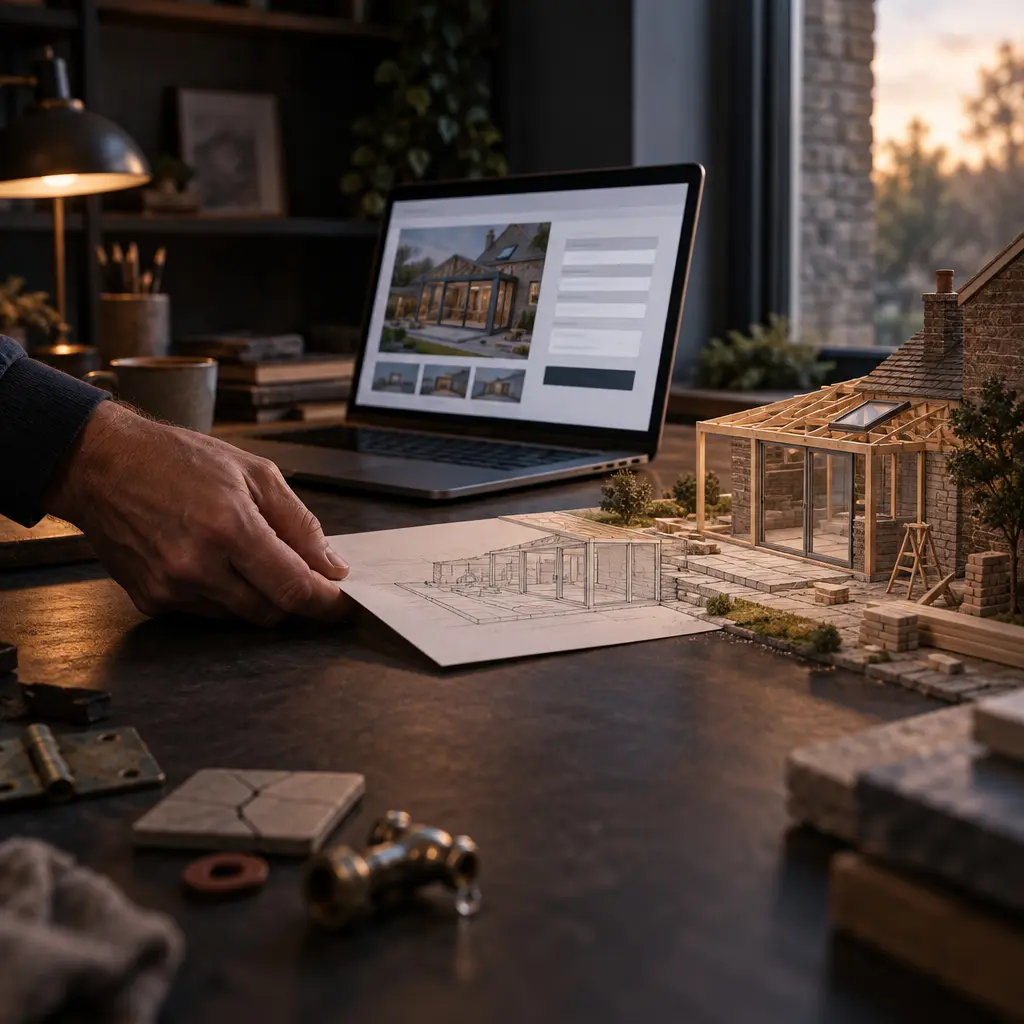
Here’s a made-up example. Say a builder decides they want more extension work, because extensions suit their crew and their schedule better than small repair jobs.
That one decision changes the website. Now they need a proper extensions page. It explains the kinds of extensions they take on, from a single room to a full second storey. It also answers what homeowners usually ask: how long it takes, whether they need consent, and what happens to the family while the building’s going on.
It changes how the site works, too. The enquiry form asks for the person’s location and a short description of the project, so the builder can tell at a glance whether the job fits.
So the business conversation shaped what the website says and how it works. Skip that conversation and you end up with a site that looks fine and brings in a mixed bag of enquiries. Plenty of them for work the builder never wanted in the first place.
Back to the builder: One decision about which work to chase changed the pages and the form. That’s how the site ends up filtering enquiries for you.
What do the two free hours on your business cover?
When you become a Fast Website client, you get two hours of free discussion about your business as part of getting started.
Part of that is a Business Diagnostic. It helps find where profit might be slipping away, and where there’s room to make more money.
Then the findings go straight into the website. They help us decide which services get more space, how to explain the value of each one, and what to ask for when someone gets in touch. So you’re sorting out your business thinking and your website in the same two hours. Handy.
The two hours, in brief: The Business Diagnostic looks for lost profit and room to grow, and those findings shape what goes on your site.
Who does what: me, or a specialist designer?
I’m clear on what I’m good at. I work out what the website needs to say, I write the content, and I build the bits that turn interest into enquiries. Forms, structure, the path from first visit to getting in touch. That’s my patch.
If your project needs specialist visual design, I bring in a designer. You get the right skills on each part of the job. And because I understand both the business and the build, the whole thing stays pointed at your goals.
Plenty of capable people can build you a small business website. Fewer will sit down first and ask which jobs you want more of, why your best customers stick with you, and what’s quietly draining your profit. That conversation is where the real value starts. It’s where I always begin.
Who’s doing the work: I handle the thinking, the words and the build. A designer comes in when the look needs a specialist.
How do I find out more about Fast Websites?
If you’re thinking about a new website for your business, or your current one isn’t pulling its weight, I’d be happy to talk through what you need. A Fast Website might give you everything you need, while WordPress can make sense for a more complex site. Both options are explained on my Website Creation page.
Frequently asked questions
Why would a business consultant build my small business website?
Because the site should be built around your business goals. I look at which work you want more of first, then shape the website to bring that work in.
What questions do you ask before building a website?
Which jobs you want more of, why your best customers choose you, and what someone needs to know before they feel ready to enquire.
What’s included with a Fast Website?
Two hours of free discussion about your business as part of getting started. That includes a Business Diagnostic.
What is the Business Diagnostic?
It helps find where profit might be slipping away and where there’s room to make more money. The findings feed straight into your website.
Do you do the visual design yourself?
I do the planning, copywriting and build. If your project needs specialist visual design, I bring in a designer.
How does a small business website attract the right kind of enquiry?
By focusing pages on the work you want, answering the questions those customers ask, and using an enquiry form that asks for the details you need to judge the fit.
Where can I find out more?
You can see What website options are available at this page.
The main points
Work out the business first. The layout and colours come later.
Your small business website should go after the jobs you actually want more of.
Answering customers’ questions honestly on the page builds trust before you’ve spoken.
A good enquiry form helps you tell at a glance whether a job fits.
Fast Website clients get two free hours on their business, including a Business Diagnostic.