Quick version: AI marketing fails when businesses lack clear foundations. Before touching these tools, you need three things documented: the problem you solve, who needs it most, and what makes you different. The tools amplify what you feed them. Give them confusion, you’ll get confusing content. Give them strategy, you’ll get content worth reading.
Here’s what you need to know:
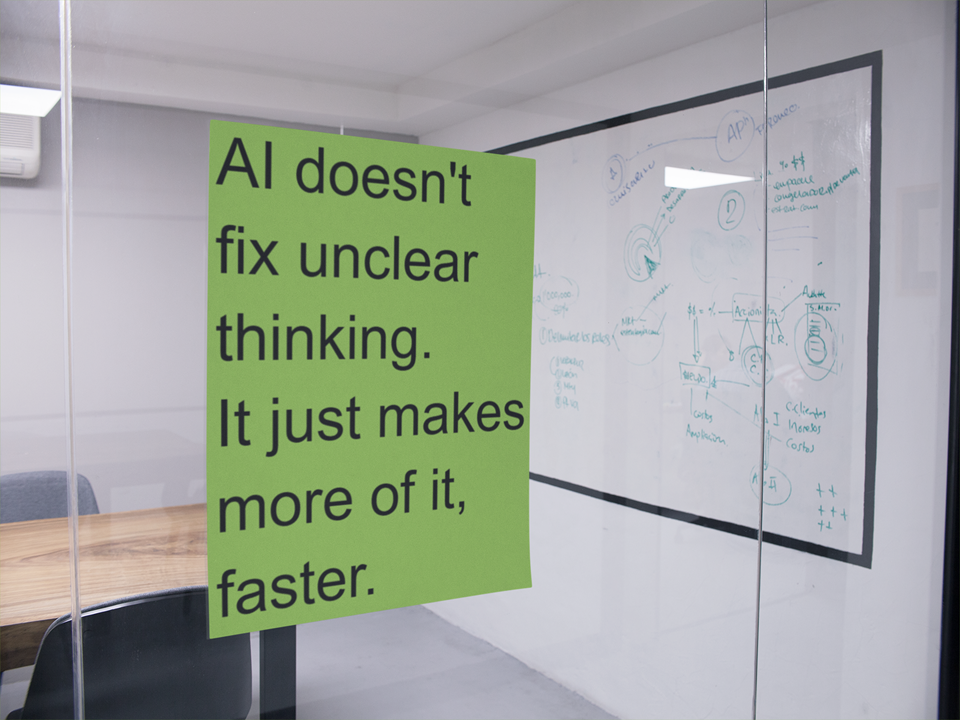
AI doesn’t fix unclear thinking. It makes more of it, faster.
Most businesses skip foundational work because the tools feel instant.
Write down your positioning, audience, and differentiation in one document.
Feed this document to your tools for specific, on-brand content.
You’re the strategist. The tools are your production assistants.
I’ve been watching small businesses struggle with AI marketing for years. Same pattern every time.
They come to me frustrated. “I tried ChatGPT for my social posts.” “I got a tool to write my emails.” “Nothing works.”
When I dig in, the problem isn’t the tool.
They’re throwing technology at a mess.
Try this free starting exercise first
If you want to see how this approach feels in practice, begin with a short clarity exercise that helps AI understand your business better.
This free exercise gives you:
-
Clearer wording about what your business does
-
A short internal summary you can keep
-
A sense of how your clearer context changes AI output
No tools to buy, no pressure, and no obligation.
Try the Clarity Exercise for AI Marketing
Once you’ve done that, you’ll be in a much stronger position to decide whether the full system will fit your business and your time.
What’s the Real Problem With AI Marketing?
Here’s what I find when I ask basic questions:
They don’t know who their customer is. They don’t know what makes them different from the business down the road. They’ve got no clear message.
The technology amplifies confusion.
You’re asking a tool to organise a filing cabinet when you’ve thrown everything in randomly. The tools don’t fix unclear thinking. They make more of it, faster.
Research backs this up. Only 5% of AI initiatives in business generate meaningful value, according to MIT’s 2025 research. The main reason? Projects start without clear planning or expectations.
Bottom line: Technology isn’t your problem. Unclear foundations are.
Why AI Exposes Unclear Thinking Faster Than Previous Technology
I’ve been building websites since the 1990s, working with AI since the 2000s. I’ve watched businesses go through every tech wave.
This lack of clarity isn’t new. AI exposes it faster.
Back in the 90s, if clients had unclear messaging, the website would be rubbish. But websites took weeks to build. They had time to think. We’d have conversations. They’d work through their messaging as we went.
Same with SEO in the early 2000s. If you didn’t know what you were selling or who you were selling to, your keywords would be all over the place. But failure was slower. You’d run a campaign for three months, look at the data, regroup.
These tools are different because they’re instant.
You generate 50 social posts in an hour. Blog articles, email sequences, ad copy, all before lunch. If your thinking is muddled, you’re producing massive amounts of muddled content at speed.
The technology removed the natural pause in marketing. The pause where you’d sit down and think because the old tools were slower.
Now there’s no pause. Only production.
What this means: Speed without strategy creates more problems than it solves.
What Three Questions Fix Your AI Marketing?
When I work with a client who’s created this mess at speed, I make them stop producing content. Full stop.
“You’re not touching AI or posting anything until we sort out the foundations.”
I start with three questions most businesses struggle to answer properly. Once they do, I make them document the answers in detail.
1. What Problem Do You Solve?
Not what you do. Not what you sell.
What problem does someone have before they find you? What’s different about their life after they work with you?
This question stops people in their tracks. They want to tell me about products or services. “We sell accounting software.” “We’re a plumbing business.”
Go deeper. Why does it matter? What happens if they don’t fix it?
2. Who Has That Problem Most Urgently?
Not everyone. Who specifically feels this pain point so badly they’ll pay to fix it?
I’ll ask “Who’s your ideal customer?” They’ll say something vague. “Small businesses.” “Anyone who needs what we sell.”
I push back. “Who buys from you? Who do you do your best work for?”
They start listing everyone. They’re trying to be everything to everyone.
3. What Makes Your Solution Different?
This is where businesses struggle most. Being different requires choices. Choices mean saying no to some customers. Small business owners find this terrifying.
They give me features. “We have great customer service.” “We’re reliable.” “We’ve been in business 15 years.”
Those aren’t differentiators. Those are table stakes.
I want to know: what do you do your competitor down the road doesn’t do, won’t do, or couldn’t do?
Key point: These three questions form the foundation for all effective AI marketing. Document the answers before you write a single prompt.
How One Designer Found Her Real Difference (And Why It Worked With AI)
I had a client who ran a small graphic design studio. She kept losing work to bigger agencies.
When I asked what made her different, she gave me the usual lines. “Personal service, quick turnaround, competitive pricing.”
Nothing distinctive.
I dug deeper. She only worked with clients in the health and wellness space. But she was apologetic about it. “I should branch out.” “I’m limiting myself.”
When I asked why she specialised there, the real story came out. She’d had serious health issues in her twenties. Been through the medical system. Found healing through alternative approaches.
She understood the wellness world from the inside.
The language. The values. The audience. What worked and what felt too clinical or too “woo woo.”
Her “limitation” was gold.
Her competitors were generalist designers who had to research the industry from scratch every time. She lived it.
Once she owned her positioning (“I only design for health and wellness businesses because I understand this world from the inside”), everything shifted.
Her messaging got clearer. Her ideal clients found her more easily. She charged more because she wasn’t competing with every designer out there.
When she used these tools, she prompted them with specific context. The content sounded like her business.
The lesson: Your constraints often make you different. Own them instead of apologising for them.
How Does AI Work When You Have Clear Foundations?
Everything changes when you give AI something specific to work with.
Before Clarity: Vague Prompts Get Generic Results
People type prompts like “Write a social media post about my business” or “Create an email about our services.”
The tool has nothing to grab onto. You get generic rubbish anyone could write.
After Clarity: Specific Prompts Get Specific Results
“Write a social media post for wellness business owners who are frustrated with designers who don’t understand their industry, explaining why working with someone who’s been a client in this space makes a difference.”
See the difference? The tool now has the problem, the person, and the difference in the prompt.
The Most Effective Approach: Create a Comprehensive Business Document
Businesses who succeed with these tools create one comprehensive document with:
Your positioning
Your audience
Your differentiation
The language your customers use
The problems you solve
Reference this document when crafting prompts. Or feed sections directly to the tool.
You’re giving the tool your strategy in writing, not expecting it to invent one.
You Become an Editor, Not a User
Once you have clarity, you know what to keep and what to bin when the tool gives you content.
You read what it generates and think “No, my clients wouldn’t say it that way” or “Yes, that’s exactly the problem they face.”
You stop trying to create content about everything. Before clarity, you’d ask the tool to write about ten different topics because you weren’t sure what mattered.
After clarity, you know exactly what conversations to have.
Less content. Better content.
What this means for you: Clarity turns the tool from a guessing machine into a production assistant working from your strategy.
What Most People Get Wrong About How AI Works
I’ve been programming since 1981. I know what’s happening under the hood.
Here’s what people get wrong: They think these tools are intelligent.
They’re not intelligent. They’re pattern matching at massive scale.
The systems have seen millions of text examples. They predict what word comes next based on patterns.
These tools are sophisticated, yes. But they’re not thinking about your business. They’re not understanding your customer’s pain points. They’re not making strategic decisions.
They’re good at producing text sounding plausible based on what you feed them.
People Treat AI Like a Consultant
They ask “What should my marketing strategy be?” They expect the tool to analyse their business and give them answers.
The tool does something else. It remixes patterns it’s seen before.
Why Foundations Matter
The tool needs you to do the thinking.
You need to know your problem, your person, your difference. Then you tell the tool “Here’s what I know, now help me express this clearly” or “Take this specific idea and give me five different ways to say it.”
You’re the strategist. The tool is the production assistant.
Remember this: Technology doesn’t replace strategy. It executes strategy you’ve already defined.
Why You Need to Document Your Business Foundations
Here’s what successful businesses do once they’ve answered those three foundational questions: they write it all down.
Not scribbled notes. A proper document capturing everything about your business.
What to Include in Your Business Document
The problem you solve
Your person (ideal customer)
Your difference
Your values
Your positioning
The specific language your customers use
The questions they ask before they buy
I’ve watched this transform how businesses work with these tools.
Benefits of a Comprehensive Business Document
When you have this document, you’re not starting from scratch every time you need content.
You’re not trying to remember how you explained your difference last week. You’re not second-guessing whether you’re staying on message.
You’ve got a reference point.
You feed this document to the tool. Give it the full context of your business. Not in a vague prompt, but in detailed, specific terms.
Tell it exactly who you serve, what problems you solve, how you’re different, and why it matters.
The tool isn’t guessing. It’s working from your strategy. The content it generates sounds like your business because you’ve given it the blueprint.
Beyond AI: Your Business Foundation
This document becomes your foundation for everything.
Not only AI-generated content. How you train staff. How you explain your business to anyone. How you make decisions about what opportunities to pursue.
The takeaway: One comprehensive document transforms your results and your entire business communication.
Your Action Plan: What to Do Right Now
Stop producing content. Right now.
Before you touch these tools again, do this:
Step 1: Answer Three Questions
Sit down and answer these properly:
What problem do you solve?
Who has this problem most urgently?
What makes your solution different?
Don’t accept vague answers. Push yourself. Go deeper.
Step 2: Document Everything
Write it all down. Create a document capturing your answers in detail.
Include:
The specific language your customers use
The questions they ask
What makes you different in concrete terms, not generic claims
This becomes your business foundation. The reference point for every piece of content you create, every prompt you write, every strategic decision you make.
Step 3: Use Your Document With the Tools
Get those foundations clear and documented. The technology becomes something amplifying your thinking instead of exposing your confusion.
Frequently Asked Questions About AI Marketing Foundations
Why doesn’t AI marketing work for most small businesses?
Marketing with these tools fails when businesses lack clear foundations. The tools amplify whatever you feed them. If you feed them unclear thinking, you get unclear content at scale. The problem isn’t the technology. The problem is missing strategy.
What three things do I need before using AI for marketing?
You need to know: (1) What problem you solve, (2) Who has this problem most urgently, and (3) What makes your solution different. Document these answers in detail before writing any prompts.
How do I create a business document for AI?
Write down your positioning, your ideal customer, your differentiation, the language your customers use, and the problems you solve. Include specific details, not generic claims. Reference this document when creating prompts, or feed sections directly to the tool.
What’s the difference between AI before and after clarity?
Before clarity, you write vague prompts like “Write a social post about my business.” You get generic content. After clarity, you write specific prompts including your problem, person, and difference. You get content sounding like your business.
Is AI intelligent enough to create my marketing strategy?
No. These tools are pattern matching at massive scale, not intelligence. They predict what word comes next based on patterns they’ve seen. They don’t think about your business, understand your customers, or make strategic decisions. You do the strategy. The tools do the production.
How long should my business foundation document be?
Long enough to capture specific details about your problem, person, and difference. Include the actual language your customers use, not vague descriptions. Quality matters more than length. A detailed page beats generic paragraphs.
What if my business tries to serve everyone?
Being everything to everyone means being nothing to no one. Choose who you serve best. Who feels your solution’s value most urgently? Who do you do your best work for? Start there. Specificity attracts the right customers better than vague appeals.
How do I find what makes my business different?
Look at your constraints, not your features. What do you do your competitor doesn’t do, won’t do, or couldn’t do? Often your “limitations” (like specialising in one industry) become your differentiation. Own them instead of apologising for them.
Key Takeaways
Marketing with these tools fails because businesses lack clear foundations, not because of the technology itself.
Before using these tools, document three things: the problem you solve, who needs it most, and what makes you different.
These tools are pattern matching, not intelligence. They need you to do the strategic thinking.
Create a comprehensive business document capturing your positioning, audience, differentiation, and customer language.
Feed your business document to these tools for specific, on-brand content instead of generic output.
Your constraints often make you different. Own them instead of treating them as limitations.
You’re the strategist. The tools are your production assistants working from your strategy.